The landscape of smart home technology is undergoing a rapid and transformative evolution, driven primarily by incredible advancements in Artificial Intelligence. What once seemed like science fiction is now becoming an everyday reality, making our homes more intuitive, efficient, and responsive to our needs. This blog post delves into the five most essential cuttingedge breakthroughs shaping the future of smart home electronics devices, showcasing how AI is redefining convenience, security, and sustainability.
From predictive automation to hyper-personalized experiences, these innovations are not just incremental improvements; they represent fundamental shifts in how we interact with our living spaces. Prepare to explore the forefront of smart home intelligence, where your devices don’t just follow commands but anticipate your desires. Understanding these advancements is key to appreciating the true potential of modern smart home ecosystems.
The Rise of Proactive & Predictive AI in Smart Homes
One of the most significant cuttingedge advancements in smart home AI is the shift from reactive to proactive intelligence. Early smart devices primarily responded to direct commands or predefined schedules. Today, AI-powered systems are learning user habits, environmental factors, and even personal preferences to anticipate needs before they are explicitly stated.
This predictive capability is revolutionizing everything from climate control to lighting. Imagine a smart thermostat that not only learns your preferred temperatures but also considers upcoming weather forecasts, your work schedule, and even the insulation properties of your home to optimize heating and cooling proactively. Such systems don’t just save energy; they create a consistently comfortable environment without constant manual adjustments.
Intelligent Automation Beyond Schedules
Traditional smart home automation often relies on “if-then” rules or fixed schedules. While useful, these lack the adaptability of true intelligence. Modern AI takes automation to a whole new level by continuously learning and refining its actions based on real-time data and user feedback.
For example, cuttingedge lighting systems can adjust brightness and color temperature throughout the day, mimicking natural light cycles to support circadian rhythms. They might even dim subtly when you’re watching a movie, or brighten slightly when you’re reading, all without you having to lift a finger. This level of nuanced control creates an environment that truly adapts to your lifestyle, enhancing well-being and productivity. This goes beyond simple timers, leveraging complex algorithms to understand context and intent.
(Image: A sleek smart home interface showing various automated settings. Alt Text: Cuttingedge smart home interface for proactive automation.)
Enhanced Natural Language Processing & Multimodal Interfaces
The way we communicate with our smart homes is becoming far more intuitive and human-like, thanks to breakthroughs in Natural Language Processing (NLP) and multimodal interfaces. No longer are we limited to rigid commands; AI now understands context, nuance, and even emotional tone.
Voice assistants are at the forefront of this evolution, capable of engaging in more natural conversations, understanding complex multi-part requests, and differentiating between multiple speakers. This makes interacting with your home less like giving orders to a machine and more like speaking to an intelligent assistant.
Understanding Context and Nuance with Cuttingedge AI
The latest generation of smart home AI can infer intent even from ambiguous commands. If you say, “It’s a bit chilly in here,” your smart thermostat might not just bump up the temperature by a fixed degree. Instead, it could consider the current outdoor temperature, the time of day, and your past preferences for “a bit chilly” to make a more intelligent adjustment. This contextual awareness is a hallmark of truly cuttingedge AI.
Beyond voice, multimodal interfaces are emerging, combining voice with gestures, facial recognition, and even gaze tracking. Imagine adjusting your media volume with a simple hand gesture, or having your smart mirror suggest outfits based on your schedule and the weather, all without a single spoken word. These interfaces create a seamless and highly personalized user experience, making interaction effortless and enjoyable. A recent study by Grand View Research highlights the rapid growth in the global smart home market, driven significantly by advances in intuitive user interfaces.
Advanced Security & Privacy with On-Device AI
Security and privacy are paramount concerns in the smart home era, and AI is playing a pivotal role in addressing them. Rather than relying solely on cloud-based processing, many cuttingedge smart home devices are now incorporating on-device or “edge” AI. This means sensitive data can be processed locally, reducing latency and enhancing privacy by minimizing the amount of information sent to external servers.
From sophisticated facial recognition for door locks to anomaly detection in security cameras, on-device AI offers a robust layer of protection. It allows for faster decision-making, as data doesn’t need to travel to the cloud and back, which is crucial for real-time security applications.
Edge AI for Enhanced Protection and Privacy
Cuttingedge smart security cameras, for instance, can now perform advanced object recognition directly on the device. This allows them to differentiate between pets, vehicles, and humans, sending alerts only for relevant events, significantly reducing false alarms. More importantly, this processing can happen without sending constant video streams to the cloud, thus protecting user privacy. This localized processing capability also makes these devices more resilient to internet outages.
Another crucial application is in smart doorbells and locks. AI-powered facial recognition can identify authorized individuals and grant access without requiring a key or phone. Furthermore, these systems can detect unusual patterns or potential threats, such as a package being left for an unusually long time or a person lingering near the property. The focus on privacy-by-design, with data processing happening at the “edge,” is a key differentiator for these next-generation security solutions, offering peace of mind to homeowners.
(Image: A smart security camera with an AI chip visible. Alt Text: Cuttingedge AI chip in a smart security camera for on-device processing.)
Seamless Interoperability & Ecosystem Integration
One of the long-standing challenges in the smart home market has been the fragmentation of ecosystems. Devices from different manufacturers often struggle to communicate seamlessly, leading to a disjointed user experience. However, new cuttingedge AI-driven initiatives and industry standards are rapidly bridging these gaps, fostering true interoperability.
AI is becoming the “universal translator” that allows devices, regardless of their brand or underlying protocol, to work together harmoniously. This integration is crucial for creating a truly smart home where all components function as a unified, intelligent system rather than a collection of disparate gadgets.
AI as the Universal Smart Home Translator
Initiatives like Matter, an open-source connectivity standard, are leveraging AI principles to create a more unified smart home experience. AI-powered hubs and platforms can now interpret and translate commands and data between devices using different protocols (like Zigbee, Z-Wave, Wi-Fi, and Bluetooth). This means you no longer have to worry if your new smart bulb will “talk” to your existing smart thermostat or security system.
Beyond basic communication, AI enables deeper integration, allowing for complex routines and automations that span multiple device types and brands. For example, your smart speaker could use its AI to understand that you’re leaving the house, then instruct your smart lock to secure the doors, your smart lights to turn off, and your smart thermostat to enter an energy-saving mode, all without individual commands for each device. This level of synergistic operation is a testament to the power of cuttingedge AI in creating cohesive smart environments. For those interested in building a robust smart home, exploring platforms that support these emerging standards is highly recommended.
Adaptive Energy Management & Sustainability with AI
As concerns about climate change and energy consumption grow, AI is emerging as a powerful tool for making our homes more sustainable. Cuttingedge AI features in smart home electronics are now capable of intelligently managing energy usage, reducing waste, and even integrating with renewable energy sources.
This goes far beyond simple timers on appliances. AI systems analyze usage patterns, electricity pricing, weather forecasts, and grid demand to optimize energy consumption in real-time, leading to significant cost savings and a reduced environmental footprint.
Optimizing Consumption for a Greener Future
Smart energy management systems, powered by AI, can learn which appliances consume the most energy and during what times. They can then suggest or automatically implement strategies to shift high-draw activities to off-peak hours when electricity is cheaper and often generated from cleaner sources. For instance, your smart washing machine might delay its cycle until late at night, or your EV charger might optimize charging based on grid availability and your departure time.
Furthermore, AI can integrate with solar panels and battery storage systems, intelligently managing energy flow to maximize self-consumption of renewable energy and minimize reliance on the grid. This level of dynamic energy optimization is a truly cuttingedge application of AI, transforming homes into active participants in a smarter, greener energy ecosystem. Companies like ecobee and Nest have been pioneers in this space, showcasing how AI can lead to tangible energy savings for homeowners.
(Image: A smart home dashboard displaying real-time energy consumption. Alt Text: Cuttingedge energy management dashboard for sustainable smart homes.)
Conclusion: Embracing the Cuttingedge Future of Smart Homes
The advancements in AI for smart home electronics devices are nothing short of revolutionary. From proactive automation and enhanced natural language processing to advanced on-device security, seamless interoperability, and adaptive energy management, these five essential breakthroughs are redefining what a home can be. We are moving towards living spaces that are not just “smart” but truly intelligent, intuitive, and deeply integrated into our daily lives.
These cuttingedge features promise greater convenience, enhanced security, significant energy savings, and a more personalized living experience than ever before. As AI continues to evolve, we can expect even more sophisticated and integrated solutions that will further blur the lines between technology and our natural environment. The future of smart homes is here, and it’s more intelligent, responsive, and sustainable than we could have imagined.
Are you ready to transform your living space with these incredible advancements? Explore the latest smart home devices equipped with cuttingedge AI features and take the first step towards a more intelligent and efficient home. Discover how these technologies can simplify your life and contribute to a greener future today!
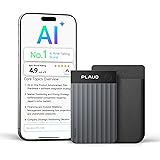
Plaud Note Pro AI Voice Recorder, Transcribe & Summarize with AI, App Control, Note Taker for Meetings & Calls, Supports 112 Languages, Ultra-Slim w/InstantView Display, Case Included, Black
$189.00 (as of March 21, 2026 13:21 GMT +00:00 - More infoProduct prices and availability are accurate as of the date/time indicated and are subject to change. Any price and availability information displayed on [relevant Amazon Site(s), as applicable] at the time of purchase will apply to the purchase of this product.)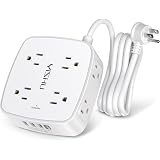
6 Ft Surge Protector Power Strip - 8 Widely Outlets with 4 USB Ports, 3 Side Outlet Extender with 6 Feet Extension Cord, Flat Plug, Wall Mount, Desk USB Charging Station, ETL,White
$12.49 (as of March 21, 2026 13:21 GMT +00:00 - More infoProduct prices and availability are accurate as of the date/time indicated and are subject to change. Any price and availability information displayed on [relevant Amazon Site(s), as applicable] at the time of purchase will apply to the purchase of this product.)