The relentless pace of innovation in the semiconductor industry demands increasingly sophisticated design methodologies. As chips become more complex, integrating billions of transistors into smaller footprints, traditional Electronic Design Automation (EDA) tools often struggle to keep up with the sheer volume of data and design permutations. This is where Aipowered Eda Tools step in, revolutionizing how next-generation chips are conceived, designed, verified, and manufactured. These cutting-edge solutions leverage artificial intelligence and machine learning to automate, accelerate, and optimize critical stages of the chip design process, promising unprecedented efficiency and performance gains.
In today’s competitive landscape, design teams are constantly seeking an edge. Aipowered Eda Tools are no longer a luxury but a necessity for achieving design success, reducing time-to-market, and ensuring the highest quality in complex System-on-Chips (SoCs). From initial architectural exploration to final physical implementation and post-silicon validation, AI is transforming every facet of EDA. This post will delve into the latest updates and highlight five ultimate Aipowered Eda Tools that are pivotal for next-gen chip design success.
The Evolution of Chip Design with Aipowered Eda Tools
The journey of chip design has always been one of constant evolution, driven by Moore’s Law and the insatiable demand for more powerful, efficient, and compact electronic devices. Early EDA tools automated manual layout and simulation, but the complexity of modern designs, especially those incorporating advanced process nodes like 3nm or 2nm, has pushed these traditional approaches to their limits.
Enter artificial intelligence. The integration of AI and machine learning into EDA represents a paradigm shift. These Aipowered Eda Tools can process vast datasets, learn from past designs, predict outcomes, and optimize parameters in ways that human designers or rule-based algorithms simply cannot. This intelligence allows designers to explore a much larger design space, identify optimal solutions faster, and mitigate potential issues before they become costly problems.
Why Aipowered Eda Tools are a Game-Changer
The benefits of adopting Aipowered Eda Tools are multifaceted and profound. They directly address some of the most pressing challenges in contemporary chip design, such as increasing design complexity, escalating verification costs, and the need for faster turnaround times. By automating repetitive tasks and providing intelligent insights, AI empowers engineers to focus on higher-level innovation rather than getting bogged down in intricate details.
Statistics show a compelling picture: leading semiconductor firms report significant reductions in design cycle times, often by 20-30%, and improvements in power, performance, and area (PPA) metrics by 10-15% when leveraging advanced AI capabilities. These tools learn from historical data and simulation results, enabling them to make more informed decisions and predictions, thereby enhancing design quality and reducing costly design iterations. For instance, AI can predict potential timing violations or power hotspots with remarkable accuracy, allowing proactive adjustments.
5 Ultimate Aipowered Eda Tools for Design Success
The market for Aipowered Eda Tools is rapidly expanding, with major players and innovative startups continuously releasing new capabilities. While specific commercial products often integrate multiple AI functionalities, we can categorize the most impactful applications of AI in EDA into five key areas, which represent the ultimate tools for modern chip designers.
1. AI for Design Space Exploration and Architecture Optimization
One of the most critical early stages in chip design is architectural exploration, where designers evaluate countless permutations of IP blocks, interconnects, and microarchitectures to meet target specifications. Traditionally, this has been a time-consuming and often heuristic process. Aipowered Eda Tools are transforming this by intelligently navigating the vast design space.
These AI-driven platforms use reinforcement learning and genetic algorithms to autonomously explore billions of possible architectural configurations. They can quickly identify optimal trade-offs between performance, power, and area, dramatically accelerating the decision-making process. For example, AI can suggest the best cache hierarchy or the most efficient data path for a given workload, far surpassing what manual exploration could achieve. This capability ensures that the foundation of the chip is robust and optimized from the very beginning.
2. AI for Verification and Validation Acceleration
Verification is notoriously the most time-consuming and resource-intensive part of chip design, often consuming 70% or more of the total development effort. Finding elusive bugs in complex SoCs before tape-out is paramount, as a single silicon bug can cost millions of dollars and cause significant delays. Aipowered Eda Tools are making immense strides in this area.
AI algorithms are employed to enhance various verification techniques. Machine learning can prioritize test cases, identify critical design paths that are prone to errors, and even generate intelligent test patterns that are more likely to uncover corner-case bugs. Furthermore, AI-powered formal verification tools can more effectively prove design correctness by guiding theorem provers and reducing the search space. This intelligent approach leads to significantly faster verification cycles and higher confidence in design correctness, reducing the risk of costly re-spins.
3. AI for Physical Design and Layout Optimization
Physical design, which includes placement, routing, and clock tree synthesis, is where the logical design is translated into a physical layout on silicon. This stage is incredibly complex, especially at advanced nodes where factors like wire resistance, capacitance, and thermal effects become critical. Aipowered Eda Tools are proving invaluable here.
AI-driven placement and routing engines can achieve superior PPA metrics compared to traditional rule-based algorithms. They learn from previous successful layouts and apply predictive models to optimize wire length, reduce congestion, and improve timing closure. For instance, AI can intelligently distribute standard cells and IP blocks to minimize power consumption and maximize performance, leading to more compact and efficient layouts. This optimization is crucial for achieving high yields and meeting stringent performance targets in next-gen designs.
4. AI for Power and Performance Optimization with Aipowered Eda Tools
In modern chip design, power consumption and performance are often conflicting goals; improving one can negatively impact the other. Striking the right balance is a delicate art, and Aipowered Eda Tools are providing the precision needed to master it. These tools leverage AI to analyze vast amounts of simulation data and identify opportunities for optimization across various design stages.
AI models can predict power leakage hotspots, optimize clock gating strategies, and fine-tune voltage and frequency scaling (DVFS) for specific workloads. They can also perform dynamic power analysis with greater accuracy, identifying scenarios where power can be reduced without compromising performance. By continuously learning from design iterations, these tools enable designers to achieve superior power efficiency and higher performance targets simultaneously, which is critical for applications ranging from mobile devices to high-performance computing.
5. AI for Manufacturing Test and Yield Optimization
The challenges don’t end with design completion; manufacturing test and ensuring high yield are equally vital for commercial success. As process technologies shrink, manufacturing defects become more prevalent and harder to detect. Aipowered Eda Tools are extending their reach into this domain, offering solutions that bridge the gap between design and manufacturing.
AI-powered test pattern generation can create more effective and efficient test vectors, reducing test time and improving fault coverage. Machine learning algorithms can analyze manufacturing test data to identify root causes of yield loss, predict potential failures, and even suggest design-for-manufacturability (DFM) improvements for future designs. This proactive approach not only saves significant manufacturing costs but also accelerates the ramp-up to volume production. Companies are seeing measurable improvements in yield rates by employing these intelligent tools, solidifying the importance of Aipowered Eda Tools throughout the entire product lifecycle.
The Future Landscape of Aipowered Eda Tools
The integration of AI into EDA is still in its nascent stages, with immense potential for further growth and innovation. As AI algorithms become more sophisticated and computational power increases, we can expect even more transformative changes. Future Aipowered Eda Tools will likely feature deeper integration across the entire design flow, predictive analytics that can anticipate design challenges before they arise, and even autonomous design capabilities that require minimal human intervention.
The industry is also exploring how AI can aid in designing for emerging technologies, such as quantum computing and neuromorphic chips, which present unique design challenges. Collaboration between leading EDA vendors, semiconductor companies, and academic research institutions is crucial for pushing the boundaries of what Aipowered Eda Tools can achieve. As chip complexity continues its upward trajectory, AI will become an indispensable co-pilot for every chip designer, enabling the creation of the next generation of groundbreaking electronic devices.
Conclusion
The era of Aipowered Eda Tools has arrived, fundamentally reshaping the landscape of chip design. From optimizing architectural exploration and accelerating verification to enhancing physical design and improving manufacturing yield, AI is proving to be a game-changer at every stage. The five ultimate areas highlighted—design space exploration, verification, physical design, power/performance optimization, and manufacturing test—demonstrate the pervasive and profound impact of AI on the creation of next-gen chips.
By leveraging these intelligent solutions, design teams can overcome the growing complexities of advanced process nodes, reduce development costs, accelerate time-to-market, and achieve unprecedented levels of performance and efficiency. The ongoing advancements in Aipowered Eda Tools promise a future where chip design is not just faster and more efficient, but also more innovative and robust. Embrace the power of AI to unlock your full design potential.
Ready to revolutionize your chip design process? Explore how integrating Aipowered Eda Tools can give your team a competitive edge and drive your next-gen projects to unparalleled success. Contact leading EDA vendors today to learn more about their AI-powered solutions and embark on a new era of innovation.

Blink Outdoor 4 – Wireless smart security camera, two-year battery life, two-way talk. Required Sync Module not included – Add-on camera
$37.99 (as of March 21, 2026 13:21 GMT +00:00 - More infoProduct prices and availability are accurate as of the date/time indicated and are subject to change. Any price and availability information displayed on [relevant Amazon Site(s), as applicable] at the time of purchase will apply to the purchase of this product.)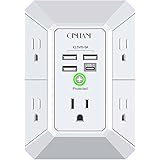
Wall Charger, Surge Protector, QINLIANF 5 Outlet Extender with 4 USB Charging Ports, 3-Sided 1680J Power Strip Multi Plug Adapter Spaced for Home Travel Office
$9.98 (as of March 21, 2026 13:21 GMT +00:00 - More infoProduct prices and availability are accurate as of the date/time indicated and are subject to change. Any price and availability information displayed on [relevant Amazon Site(s), as applicable] at the time of purchase will apply to the purchase of this product.)