The world of electronics is experiencing a profound transformation, driven by unprecedented advancements in artificial intelligence. Printed Circuit Board (PCB) design, long considered a highly specialized and often manual discipline, is now at the forefront of this revolution. The integration of AI into design software is not just an incremental improvement; it’s a fundamental shift, redefining efficiency, accuracy, and innovation.
This comprehensive guide delves into the 5 Latest Breakthrough Essential Secrets that are revolutionizing PCB layout and verification. We will explore how AI is empowering engineers to overcome complex challenges, accelerate design cycles, and achieve unparalleled levels of precision. Discover the pivotal role of the latest AI tools in shaping the future of electronics development.
The Latest Paradigm Shift in PCB Design with AI
The landscape of electronic design automation (EDA) is undergoing its most significant evolution in decades. Traditional PCB design processes, while robust, often involve extensive manual iterations, leading to prolonged development cycles and potential human errors. The introduction of the latest AI-powered software is drastically changing this equation, offering intelligent automation and predictive capabilities.
Engineers are no longer just drawing connections; they are collaborating with intelligent systems that can learn, optimize, and even anticipate design challenges. This paradigm shift ensures that even the most complex high-density interconnect (HDI) boards can be designed with remarkable speed and accuracy. The adoption of these latest technologies is becoming indispensable for staying competitive in a rapidly evolving market.
From Manual Iteration to Intelligent Automation: The Latest Tools
Historically, PCB design relied heavily on an engineer’s experience and iterative manual adjustments. This process was time-consuming and prone to inconsistencies, especially with increasing circuit complexity. The latest generation of AI-powered design tools fundamentally alters this workflow, introducing intelligent automation.
These tools leverage sophisticated algorithms to automate tasks such as component placement, trace routing, and design rule checking. They can analyze vast datasets of existing designs to identify optimal solutions and predict potential issues before they arise. This move towards intelligent automation is one of the most significant latest advancements in the field.
The Urgency for Latest AI Integration
In today’s fast-paced electronics industry, time-to-market is a critical competitive differentiator. Companies that can design, verify, and produce PCBs more quickly gain a substantial advantage. The urgency to integrate the latest AI solutions stems directly from this need for speed and efficiency.
Moreover, the increasing complexity of modern electronic devices, from IoT sensors to advanced automotive systems, demands a level of precision and optimization that traditional methods struggle to provide. Adopting the latest AI tools is no longer a luxury but a strategic imperative for innovation and market leadership. The benefits extend beyond speed, encompassing cost reduction and enhanced reliability.
Secret 1: Intelligent Component Placement and Routing – The Latest Efficiency Boost
One of the most time-consuming aspects of PCB design is the precise placement of components and the routing of traces. Achieving optimal density, signal integrity, and manufacturability manually is an incredibly complex challenge. The latest AI-powered software introduces intelligent algorithms that revolutionize this process, offering an unprecedented efficiency boost.
These systems can analyze design constraints, thermal considerations, and signal path requirements simultaneously. They then propose optimized layouts and routing paths that far surpass what a human designer could achieve in the same timeframe. This is a critical latest breakthrough for high-performance boards.
Image: A screenshot of the latest AI-powered PCB design software interface showing automated component placement. Alt Text: Latest AI PCB software user interface.
AI-driven Optimization for Density and Performance
AI algorithms excel at multi-objective optimization, a task that is incredibly difficult for humans. In PCB design, this means simultaneously optimizing for component density, minimizing trace lengths, reducing electromagnetic interference (EMI), and improving thermal dissipation. The latest software can explore millions of design permutations in minutes.
This capability ensures that the final layout is not just functional but also performs optimally under various operational conditions. The result is more compact, more efficient, and more reliable PCBs, crucial for miniaturized devices. This level of optimization represents a significant latest advancement.
Reducing Design Cycles with Latest Algorithms
The iterative nature of manual placement and routing can extend design cycles by weeks or even months. AI-powered tools dramatically compress this timeline by automating large portions of the process. Engineers can define parameters and constraints, allowing the AI to generate viable layouts almost instantly.
This allows designers to spend more time on high-level architectural decisions and less on tedious, repetitive tasks. The ability to rapidly prototype and iterate designs using the latest algorithms translates directly into faster time-to-market. This reduction in design cycles is arguably the most impactful latest benefit.
Secret 2: Enhanced Design Rule Checking (DRC) and Verification – The Latest Accuracy Standard
Ensuring a PCB design adheres to all manufacturing and electrical specifications is paramount. Traditional Design Rule Checking (DRC) is effective but often reactive, flagging errors after they’ve been made. The latest AI-powered verification tools elevate this to a proactive, predictive standard, significantly enhancing accuracy and reliability.
These advanced systems go beyond simple rule-checking, employing machine learning to understand design intent and predict potential issues before they manifest as errors. This proactive approach minimizes costly re-spins and accelerates the path to production. It represents a vital latest improvement in quality assurance.
Predictive Error Detection with Latest Machine Learning
Machine learning algorithms are trained on vast datasets of successful and failed PCB designs. This allows them to identify subtle patterns and correlations that might escape human detection. The latest AI tools can predict potential design rule violations, manufacturability issues, or performance bottlenecks even during the initial design phase.
By flagging these issues early, designers can make adjustments before they become deeply embedded in the layout, saving significant time and resources. This predictive capability is a hallmark of the latest generation of EDA software. The insights provided by these models are invaluable.
Image: A diagram illustrating AI-driven predictive error detection in PCB layout. Alt Text: Latest AI predictive error detection diagram.
Simulating Performance with Latest Precision
Beyond static rule checking, AI is transforming performance simulation. The latest software integrates advanced simulation engines capable of analyzing signal integrity, power integrity, and electromagnetic compatibility (EMC) with unprecedented precision. These simulations can run complex scenarios that would be impractical for manual analysis.
AI can dynamically adjust simulation parameters based on design changes, providing real-time feedback on potential performance impacts. This proactive performance analysis ensures that the board will function as intended under real-world conditions, a critical latest capability for complex high-speed designs.
Secret 3: Thermal and Signal Integrity Analysis – The Latest Frontier in Reliability
Thermal management and signal integrity are critical for the long-term reliability and performance of any electronic device. Poor thermal design can lead to component failure, while compromised signal integrity can result in erratic behavior. The latest AI-powered tools are pushing the frontier in these areas, offering sophisticated analytical capabilities.
These systems can accurately predict thermal hotspots and signal degradation, allowing designers to mitigate risks before physical prototypes are ever built. This proactive approach to reliability is one of the most compelling latest advantages of AI in PCB design. It ensures robust and durable products.
Proactive Thermal Management with Latest AI Models
AI models can simulate complex thermal profiles of PCBs under various load conditions. They consider component power dissipation, material properties, and airflow dynamics to identify potential hotspots. The latest software can then suggest optimal component placement, heatsink integration, and thermal vias to dissipate heat effectively.
This proactive thermal management prevents premature component aging and ensures stable operation, especially in densely packed boards or high-power applications. Understanding and managing heat is a crucial latest challenge that AI addresses effectively.
Ensuring Signal Quality with Latest Predictive Analytics
Maintaining signal integrity in high-speed and high-frequency designs is notoriously difficult. Reflections, crosstalk, and impedance mismatches can severely degrade signal quality. The latest AI tools employ predictive analytics to identify potential signal integrity issues early in the design phase.
They can analyze trace geometries, layer stack-ups, and component characteristics to predict signal distortion. Furthermore, AI can recommend adjustments to routing, termination schemes, or stack-up configurations to ensure clean signal transmission. This is a vital latest capability for advanced communication systems.
Secret 4: Design for Manufacturability (DFM) and Assembly (DFA) – The Latest Production Edge
A brilliant design is useless if it cannot be manufactured efficiently or assembled reliably. Design for Manufacturability (DFM) and Design for Assembly (DFA) are crucial considerations that traditionally required extensive collaboration with manufacturing partners. The latest AI tools integrate these considerations directly into the design process, providing a significant production edge.
By embedding manufacturing intelligence, AI ensures that designs are not only functional but also cost-effective and easy to produce. This proactive approach minimizes production delays and reduces overall manufacturing costs. It’s a key latest innovation for streamlining the entire product lifecycle.
Streamlining Production with Latest AI Insights
AI algorithms are trained on manufacturing process data, including tolerances, equipment capabilities, and material constraints. The latest software can automatically check designs against these manufacturing rules, identifying potential issues like insufficient clearances, incorrect pad sizes, or problematic component orientations. This ensures a smoother transition from design to production.
By flagging these issues early, AI eliminates costly reworks and ensures a higher first-pass yield in manufacturing. This streamlining of the production process is a direct benefit of integrating the latest AI insights into design. It helps avoid expensive mistakes down the line.
Cost Reduction through Latest Smart Design
Integrating DFM and DFA considerations early in the design phase directly translates to significant cost reductions. The latest AI tools can optimize designs for component commonality, panel utilization, and efficient assembly sequences. This intelligent optimization reduces material waste and labor costs.
Furthermore, by minimizing manufacturing errors and re-spins, AI helps avoid expensive delays and scrap. The ability to produce a reliable, manufacturable design right the first time is a powerful latest advantage that directly impacts the bottom line. Smart design leads to smarter financial outcomes.
Secret 5: Collaborative Design and Version Control – The Latest Team Synergy
Modern PCB design is rarely a solitary effort; it involves multiple engineers, specialists, and stakeholders. Managing design iterations, feedback, and concurrent work can be challenging. The latest AI-powered platforms are transforming collaborative design and version control, fostering unprecedented team synergy and efficiency.
These tools provide intelligent frameworks for real-time collaboration, automated conflict resolution, and robust version tracking. They ensure that all team members are working on the most current and validated design, minimizing errors and maximizing productivity. This represents a crucial latest step in team-based engineering.
Real-time Collaboration with Latest Cloud-based Platforms
Cloud-based AI design platforms enable real-time collaboration among geographically dispersed teams. Multiple engineers can work on different sections of a PCB simultaneously, with the AI system managing conflicts and ensuring design consistency. This accelerates the design process and improves communication.
The latest platforms offer features like shared workspaces, instant feedback mechanisms, and automated merging of design changes. This seamless collaboration is indispensable for complex projects involving diverse expertise. It truly embodies the spirit of the latest collaborative technology.
Securing Design Evolution with Latest Versioning Tools
Maintaining a clear history of design changes and ensuring proper version control is critical for accountability and potential future modifications. The latest AI-enhanced versioning tools go beyond simple file tracking. They can intelligently compare design iterations, highlight significant changes, and even suggest optimal merge strategies.
This ensures that every design evolution is documented, traceable, and secure. In the event of an issue, designers can easily revert to previous stable versions, minimizing disruption. This robust versioning is a foundational latest element for professional design workflows. It safeguards intellectual property and design integrity.
The Future is Now: Embracing the Latest AI Revolution
The five secrets discussed highlight the profound impact of AI on PCB design and verification. From intelligent automation of layout and routing to predictive error detection, advanced thermal analysis, manufacturability optimization, and seamless collaboration, AI is redefining what’s possible. The latest tools are not just assisting engineers; they are augmenting their capabilities, allowing them to tackle challenges of unprecedented complexity and scale.
The shift towards AI-powered EDA is not merely a technological upgrade; it’s a strategic move that promises faster innovation cycles, reduced development costs, and higher-quality products. Companies that embrace these latest advancements will undoubtedly gain a significant competitive edge in the rapidly evolving electronics market.
Overcoming Challenges and Adopting Latest Solutions
Adopting new technologies always comes with challenges, including initial investment, training, and integration with existing workflows. However, the long-term benefits of AI in PCB design far outweigh these hurdles. The latest software is designed with user-friendliness in mind, often featuring intuitive interfaces and comprehensive support.
Organizations should prioritize training their design teams and gradually integrating these powerful tools into their processes. Starting with pilot projects can demonstrate the immense value of these latest solutions and pave the way for broader adoption. The journey towards AI-driven design is an investment in future success.
The Economic Impact of Latest AI in EDA
The economic implications of integrating the latest AI into EDA are substantial. By accelerating design cycles, reducing errors, and optimizing for manufacturability, companies can bring products to market faster and at a lower cost. This leads to increased revenue, improved profitability, and stronger market positions.
Moreover, the ability to design more complex and reliable PCBs opens up new product categories and market opportunities. According to a recent study by a leading industry research firm, the AI in EDA market is projected to grow significantly over the next five years, underscoring its economic importance. The latest innovations are truly driving economic growth.
Conclusion
The revolution in PCB layout and verification powered by the latest AI software is undeniable. We’ve uncovered the 5 Latest Breakthrough Essential Secrets: intelligent component placement and routing, enhanced design rule checking and verification, advanced thermal and signal integrity analysis, integrated design for manufacturability and assembly, and seamless collaborative design with robust version control. Each of these secrets represents a critical leap forward, transforming traditional challenges into opportunities for innovation and efficiency.
Embracing these latest AI-driven solutions is no longer optional but essential for any organization aiming to stay at the forefront of electronics development. The benefits—faster design cycles, superior accuracy, reduced costs, and enhanced reliability—are clear and compelling. Don’t be left behind in this technological tidal wave. Explore how the latest AI-powered PCB design software can elevate your projects and accelerate your path to market. **Take the next step: Research and integrate the latest AI tools into your design workflow today to unlock their full potential.**
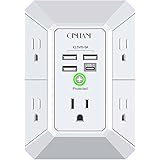
Wall Charger, Surge Protector, QINLIANF 5 Outlet Extender with 4 USB Charging Ports, 3-Sided 1680J Power Strip Multi Plug Adapter Spaced for Home Travel Office
Now retrieving the price.
(as of June 19, 2026 01:00 GMT +00:00 - More infoProduct prices and availability are accurate as of the date/time indicated and are subject to change. Any price and availability information displayed on [relevant Amazon Site(s), as applicable] at the time of purchase will apply to the purchase of this product.)
Apple AirPods 4 Wireless Earbuds, Bluetooth Headphones, Personalized Spatial Audio, Sweat and Water Resistant, USB-C Charging Case, H2 Chip, Up to 30 Hours of Battery Life, Effortless Setup for iPhone
Now retrieving the price.
(as of June 19, 2026 01:00 GMT +00:00 - More infoProduct prices and availability are accurate as of the date/time indicated and are subject to change. Any price and availability information displayed on [relevant Amazon Site(s), as applicable] at the time of purchase will apply to the purchase of this product.)