Top 5 Emerging Breakthrough Trends
The landscape of smart home technology is undergoing a transformative evolution, driven primarily by advancements in artificial intelligence. What began as simple automation is rapidly evolving into a sophisticated ecosystem that anticipates needs, understands nuances, and offers truly personalized experiences. This shift is not just about convenience; it’s about creating intuitive, responsive, and seamless interactions that redefine our daily lives. As we stand on the cusp of a new era, several **emerging** AI models are poised to revolutionize how we interact with our living spaces, making them smarter, safer, and significantly more user-friendly. These innovations promise to elevate the smart home from a collection of connected gadgets to a truly intelligent environment. Let’s explore the top five **emerging** breakthrough trends that are shaping the future of enhanced user experience in smart home devices.
The Rise of Personalized and Predictive AI in Smart Homes
One of the most significant **emerging** trends is the development of AI models capable of deep personalization and predictive behavior. Traditional smart homes often rely on pre-set rules or manual adjustments. However, the next generation of AI moves beyond this, learning individual preferences and anticipating needs before they are even articulated.
Contextual Awareness and Adaptive Learning
Advanced AI systems are now being designed to understand the context of a user’s day, not just isolated commands. This involves integrating data from various sensors – motion, temperature, light, even calendar events – to build a comprehensive picture of routines and preferences. For instance, the system learns when you typically wake up, how you like your coffee, or your preferred lighting for reading. This adaptive learning is an **emerging** cornerstone of truly intelligent environments.
These models continuously refine their understanding, adjusting to changes in habits or external factors like weather. Imagine your smart thermostat not just reacting to the current temperature, but pre-cooling the house on a hot day because it learned you prefer a cooler environment after your morning run. This predictive capability significantly enhances comfort and energy efficiency. (Image alt text: Diagram illustrating a smart home AI learning user routines and adapting settings automatically)
Proactive Assistance and Automation
Beyond simple personalization, **emerging** AI enables proactive assistance. This means your smart home doesn’t just wait for commands; it actively suggests actions or automates tasks based on its learned understanding. For example, if you often forget to lock the back door at night, the system might send a reminder or even lock it automatically after a certain time if it detects no one is outside. This level of automation moves smart homes from reactive tools to proactive partners. [Internal Link: For more on AI-driven energy efficiency, explore our article on sustainable smart home technologies.]
Statistics show that user satisfaction dramatically increases when smart devices anticipate needs rather than merely responding. This **emerging** paradigm shifts the cognitive load from the user to the AI, making daily life smoother and less stressful. Such systems are already appearing in high-end smart home controllers, promising a future where your home truly understands you.
Enhancing Natural Language Processing for Seamless Interaction
While voice assistants have become commonplace, the next wave of AI is focused on making these interactions far more natural, intuitive, and less prone to misinterpretation. The goal is to move beyond rigid command structures to genuine, conversational understanding. This is a critical **emerging** area for user experience.
Advanced Voice Command Understanding
Current voice assistants often struggle with complex sentences, multiple commands in one utterance, or understanding context. **Emerging** Natural Language Processing (NLP) models are tackling these challenges head-on. They are being trained on vast datasets of human conversation, enabling them to comprehend nuanced language, sarcasm, and even emotional tone. This means you can say, “It’s a bit chilly in here, and I’m about to watch a movie, so dim the lights and turn on the fireplace,” and the system will understand and execute all parts of the request. This advanced understanding represents a significant leap forward.
These improved NLP capabilities are powered by sophisticated neural networks, allowing for more robust semantic analysis. The result is a reduction in frustration and a more fluid interaction, making the smart home feel less like a machine and more like an attentive companion. This is an exciting **emerging** development for everyday users. (Image alt text: Person speaking naturally to a smart speaker, illustrating advanced NLP understanding)
Multilingual and Multimodal Communication
Another **emerging** aspect of enhanced NLP is the capability for seamless multilingual and multimodal communication. Future smart homes will not only understand multiple languages simultaneously but also integrate different input methods. Imagine gesturing to turn off a light while speaking a command in a mixed-language household, and the AI comprehends both inputs perfectly. This multimodal approach combines voice, gesture, and even gaze tracking to create a richer, more intuitive user interface.
This expansion beyond single-language, single-mode interaction addresses the diverse needs of global households and users with varying abilities. Platforms leveraging **emerging** multimodal AI are already in development, promising a future where language barriers and input limitations become a thing of the past in smart home environments. [External Link: Learn more about multimodal AI research from leading institutions like Stanford University.]
Edge AI and On-Device Processing for Privacy and Speed
The reliance on cloud processing for many smart home functions presents challenges related to latency, internet dependency, and, critically, data privacy. The **emerging** trend of Edge AI and on-device processing seeks to address these concerns by bringing AI computations closer to the source of the data.
Local Data Processing and Reduced Latency
With Edge AI, complex algorithms run directly on the smart home device itself, rather than sending all data to a remote server for processing. This has several immediate benefits. Firstly, it drastically reduces latency, meaning commands are executed almost instantly. Imagine a smart lock that recognizes your face and unlocks the door within milliseconds, without waiting for cloud authentication. This is an **emerging** standard for responsiveness.
Secondly, it makes smart home devices more reliable, as they can continue to function even if the internet connection is temporarily lost. This local processing ensures that critical functions like security or environmental control remain operational. This **emerging** shift provides a robust foundation for smart home reliability. (Image alt text: Diagram showing data processing occurring directly on a smart home device, not in the cloud)
Enhanced Security and Privacy Implications
Perhaps the most compelling advantage of Edge AI is the significant enhancement it offers in terms of privacy and security. By processing sensitive data, such as facial recognition scans or voice recordings, directly on the device, there is no need to transmit this information to the cloud. This minimizes the risk of data breaches and unauthorized access. This **emerging** focus on privacy by design is paramount for user trust.
Users are increasingly concerned about how their personal data is collected and used by smart devices. Edge AI provides a powerful solution, allowing for advanced features like personalized recommendations or health monitoring without compromising sensitive information. This makes Edge AI a pivotal **emerging** technology for building trust in the smart home ecosystem. [Internal Link: Our guide to securing your smart home provides further insights into data protection.]
The Interoperability Revolution with Federated Learning and AI
One of the biggest frustrations for smart home users has been the lack of seamless interoperability between devices from different manufacturers. The **emerging** concept of federated learning, combined with advanced AI, promises to break down these silos and create a truly unified smart home experience.
Seamless Device Integration and Unified Control
Federated learning allows AI models to be trained across multiple decentralized devices without exchanging raw data. This means that devices from different brands can collectively learn from user behavior and environmental data, leading to a more cohesive and intelligent system. Imagine a smart lighting system from one brand, a thermostat from another, and a security camera from a third, all working in perfect harmony, sharing insights to optimize your home’s environment. This level of integration is an **emerging** game-changer.
This collaborative intelligence enables a unified control experience, where a single command or action can trigger a cascade of responses across various devices, regardless of their manufacturer. This eliminates the need for multiple apps and complex configurations, simplifying the smart home experience considerably. This **emerging** approach addresses a long-standing pain point for users. (Image alt text: Icons of various smart home devices from different brands connected by a central AI hub)
Collaborative Learning Without Centralized Data
The privacy benefits of federated learning are immense. Instead of sending all user data to a central server for AI training, individual devices train their own local AI models. Only the learned model updates (not the raw data) are then aggregated, ensuring that sensitive personal information never leaves the user’s home. This is a crucial **emerging** technology for balancing advanced functionality with robust privacy protection. [External Link: Google’s AI blog offers excellent resources on the principles and applications of federated learning.]
This collaborative yet private learning environment fosters rapid innovation and improvement across the smart home industry. As more devices participate in federated learning, the collective intelligence of the smart home grows exponentially, leading to ever more sophisticated and personalized user experiences. This **emerging** model represents a paradigm shift in how AI learns and evolves within our homes.
AI-Powered Health and Wellness Monitoring in the Smart Home
The smart home is increasingly becoming a hub for personal health and wellness, moving beyond fitness trackers to integrate monitoring capabilities directly into the living environment. This **emerging** application of AI promises to offer passive, continuous insights into our well-being.
Non-Invasive Sensor Technologies and Biometric Analysis
Cutting-edge AI is being combined with advanced, non-invasive sensor technologies to monitor vital signs, sleep patterns, and even subtle changes in behavior without requiring wearables or active user input. Radar, thermal, and acoustic sensors can detect breathing rates, heartbeats, and movement patterns from a distance. For example, a smart bed could monitor sleep stages and respiratory patterns, offering personalized advice for better rest. This is a rapidly **emerging** field with immense potential.
These systems can analyze changes over time, identifying anomalies that might indicate a health issue, or simply offering insights into improving daily habits. This passive monitoring makes health management effortless and integrated into daily life. This **emerging** capability transforms the smart home into a wellness sanctuary. (Image alt text: Smart home sensors discreetly integrated into a bedroom ceiling, monitoring health metrics)
Proactive Health Insights and Emergency Response
Beyond monitoring, AI-powered health systems in the smart home are designed to provide proactive insights and, in critical situations, trigger emergency responses. Imagine an AI detecting a significant change in an elderly person’s gait or a prolonged period of inactivity, then alerting family members or emergency services. Or a system that analyzes air quality and suggests opening windows or activating an air purifier based on pollen counts and user allergies. This proactive approach is an essential **emerging** feature.
These **emerging** applications are particularly valuable for independent living, offering peace of mind for both individuals and their caregivers. By integrating health monitoring with the broader smart home ecosystem, AI is creating environments that not only enhance comfort but also safeguard our health and well-being. [Internal Link: Discover more about smart home solutions for elderly care and accessibility.]
Conclusion
The future of smart home technology is undeniably intertwined with the rapid advancements in artificial intelligence. The five **emerging** trends we’ve explored—personalized and predictive AI, enhanced natural language processing, edge AI for privacy and speed, federated learning for interoperability, and AI-powered health monitoring—are collectively redefining what a smart home can be. They promise an era where our living spaces are not just connected, but truly intelligent, intuitive, and deeply integrated into our lives, offering unprecedented levels of convenience, security, and well-being.
These innovations are moving us towards a future where technology fades into the background, seamlessly enhancing our daily experiences without requiring constant attention. The focus is shifting from simply automating tasks to creating a responsive, understanding, and proactive environment. The continuous development of these **emerging** AI models will undoubtedly lead to even more groundbreaking applications, making our homes smarter than we ever imagined.
Are you ready to experience the next generation of intelligent living? Explore these **emerging** innovations and consider how they can transform your home. What smart home AI trend are you most excited about? Share your thoughts and join the conversation about shaping the future of our intelligent spaces!

Cable Zip Ties,400 Pack Black Assorted Sizes 12+8+6+4 Inch,Multi-Purpose Self-Locking Nylon Cable Cord Management,Plastic Wire Ties for Home,Office,Garden,Workshop. By HAVE ME TD
Now retrieving the price.
(as of June 19, 2026 01:00 GMT +00:00 - More infoProduct prices and availability are accurate as of the date/time indicated and are subject to change. Any price and availability information displayed on [relevant Amazon Site(s), as applicable] at the time of purchase will apply to the purchase of this product.)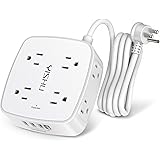
6 Ft Surge Protector Power Strip - 8 Widely Outlets with 4 USB Ports, 3 Side Outlet Extender with 6 Feet Extension Cord, Flat Plug, Wall Mount, Desk USB Charging Station, ETL,White
Now retrieving the price.
(as of June 19, 2026 01:00 GMT +00:00 - More infoProduct prices and availability are accurate as of the date/time indicated and are subject to change. Any price and availability information displayed on [relevant Amazon Site(s), as applicable] at the time of purchase will apply to the purchase of this product.)
JBL Go 4 - Ultra-Portable, Waterproof and Dustproof Bluetooth Speaker, Big JBL Pro Sound with Punchy bass, 7-Hour Built-in Battery, Made in Part with Recycled Materials (Black)
Now retrieving the price.
(as of June 19, 2026 01:00 GMT +00:00 - More infoProduct prices and availability are accurate as of the date/time indicated and are subject to change. Any price and availability information displayed on [relevant Amazon Site(s), as applicable] at the time of purchase will apply to the purchase of this product.)