The semiconductor industry is undergoing a profound transformation, driven by the relentless pursuit of faster, smaller, and more power-efficient chips. This evolution, once primarily dependent on human ingenuity and incremental design improvements, is now being supercharged by artificial intelligence. The integration of AI into the chip design workflow represents a monumental shift, ushering in an era where complex design challenges can be tackled with unprecedented speed and precision. Understanding these **Latest Tools Chip** innovations is crucial for anyone involved in or impacted by the semiconductor world.
From architectural exploration to physical layout and verification, AI-powered solutions are redefining every stage of the chip development lifecycle. These advancements are not merely incremental; they are fundamentally changing how engineers approach the intricate process of creating the digital brains of our modern world. The promise of AI in chip design lies in its ability to automate tedious tasks, optimize for multiple conflicting parameters, and even discover novel design solutions that human designers might overlook. This comprehensive overview explores the most impactful AI breakthroughs, highlighting how they are revolutionizing semiconductor development.
The Dawn of AI in Chip Design: Latest Tools Chip Landscape
For decades, chip design has been an incredibly complex, iterative process, often requiring months or even years of highly specialized engineering effort. As the number of transistors on a chip continues to grow exponentially, adhering to Moore’s Law, the design complexity has far outpaced human ability to manage it efficiently. This is where AI steps in, offering a powerful paradigm shift.
The **Latest Tools Chip** that leverage AI are designed to address these growing complexities, reducing time-to-market and improving chip performance. They utilize machine learning algorithms, deep learning networks, and reinforcement learning techniques to learn from vast datasets of previous designs and simulations. This allows them to make intelligent decisions, predict outcomes, and optimize various design parameters in ways previously unimaginable. The impact spans across the entire design flow, from high-level synthesis to low-level physical implementation.
Automated Architectural Exploration: Driving Innovation with Latest Tools Chip
One of the earliest stages of chip design involves architectural exploration, where engineers define the high-level structure and functionality of a chip. This phase is critical but traditionally very time-consuming, involving numerous trade-off analyses between performance, power, and area (PPA). AI is now accelerating this foundational step significantly.
AI-driven tools can rapidly explore a vast design space, evaluating thousands of potential architectures based on specified constraints and objectives. Using techniques like reinforcement learning, these systems can learn optimal design choices by iteratively trying different configurations and receiving feedback. This capability is a cornerstone of the **Latest Tools Chip** for front-end design, allowing for more thorough exploration and better initial decisions, ultimately leading to superior chip architectures. For instance, companies like Google have famously used reinforcement learning to optimize chip floorplans, achieving results that surpass human expert designs in a fraction of the time. (Image Alt Text: Diagram showing AI-driven architectural exploration, illustrating various design possibilities analyzed by the latest tools chip.)
AI-Powered Logic Synthesis and Optimization: Enhancing Efficiency
Once an architecture is defined, the next step is logic synthesis, which translates high-level behavioral descriptions into gate-level netlists. This process involves optimizing for performance, power, and area, often a delicate balancing act. Traditional synthesis tools rely on heuristic algorithms, but AI is adding a new layer of intelligence.
The **Latest Tools Chip** in this domain employ machine learning to predict the optimal synthesis strategies and parameters for specific design blocks. By learning from past synthesis runs and their outcomes, these tools can guide the synthesis process more effectively, leading to tighter PPA targets. This not only reduces the number of iterations required but also uncovers optimization opportunities that might be missed by conventional methods. It’s a significant leap forward in ensuring designs are both efficient and performant from the gate level upwards.
Reinforcement Learning for Physical Design: The Latest Tools Chip for Layout
Physical design, encompassing floorplanning, placement, and routing, is arguably the most complex and computationally intensive stage of chip development. The sheer number of components and interconnections on a modern chip presents an astronomical number of possible layouts. This is an area where AI, particularly reinforcement learning, is making groundbreaking contributions.
Reinforcement learning agents can be trained to perform placement and routing tasks, learning optimal strategies through trial and error within a simulated environment. Google’s “Autoplace” is a prime example, demonstrating how an AI agent can learn to generate chip floorplans that are superior to those designed by human experts in terms of power, performance, and area, all within hours instead of weeks. These **Latest Tools Chip** are not just automating tasks; they are discovering new, more efficient ways to arrange components and connect them. This innovation significantly reduces design cycles and improves manufacturing yield by creating more robust layouts. (Image Alt Text: Screenshot of an AI-optimized chip floorplan generated by the latest tools chip.)
Advanced Verification and Debugging with AI: Ensuring Robustness
Chip verification consumes a significant portion of the overall design cycle, often accounting for 60-70% of the effort. Finding and fixing bugs before fabrication is paramount, as a single error can lead to costly re-spins and delays. AI is revolutionizing this critical phase by making verification more thorough and efficient.
AI-powered verification tools can analyze vast amounts of simulation data to identify patterns, predict potential failure points, and even suggest optimal test scenarios. Machine learning algorithms can learn from previous bugs and test coverage data to guide the creation of more effective test suites, ensuring higher coverage with fewer resources. The **Latest Tools Chip** in verification can also assist in root-cause analysis, speeding up the debugging process by pinpointing the likely source of an error. This capability is vital for managing the ever-increasing complexity of modern System-on-Chip (SoC) designs, ensuring designs are robust and reliable before they ever reach the foundry.
Predictive Analytics for Manufacturing and Yield: Extending the Latest Tools Chip Impact
The influence of AI extends beyond the design phase into manufacturing and post-silicon validation. Predicting manufacturing yield and identifying potential issues early can save immense costs and time. AI is proving to be an invaluable asset in this area, leveraging vast datasets from fabrication processes.
Machine learning models can analyze manufacturing data, such as process parameters, defect maps, and test results, to predict yield variations and identify root causes of manufacturing defects. This allows for proactive adjustments in the fabrication process or design modifications to improve yield. These **Latest Tools Chip** for predictive analytics are critical for both designers and foundries, fostering a symbiotic relationship where data-driven insights lead to continuous improvement. For example, by analyzing patterns in test failures, AI can help pinpoint weak spots in a design that might not have been evident during pre-silicon verification. This proactive approach ensures higher quality chips reach the market faster.
The Future Landscape: Continued Evolution of Latest Tools Chip
The integration of AI into chip design is still in its nascent stages, yet its impact is already profound. As AI models become more sophisticated and computational resources continue to grow, we can expect even more revolutionary changes. The industry is moving towards fully autonomous design flows, where AI systems can generate and optimize entire chip designs with minimal human intervention. This future vision suggests a paradigm where designers become curators and guides for AI rather than meticulously crafting every detail themselves.
The development of specialized AI hardware, often called AI accelerators or neural processing units (NPUs), is also being influenced by AI design tools. It’s a fascinating recursive loop: AI is designing the very hardware that powers more advanced AI. This synergy promises to unlock unprecedented levels of performance and efficiency for future generations of computing. The continuous evolution of these **Latest Tools Chip** will be a key determinant of progress in the broader technology landscape, influencing everything from cloud computing to edge devices.
Challenges and Opportunities for Latest Tools Chip Adoption
While the benefits of AI in chip design are undeniable, there are also challenges to widespread adoption. The integration of new AI tools into existing, often deeply entrenched, design flows requires significant effort and investment. Data privacy and security, especially when proprietary design data is used to train AI models, are also critical considerations. Furthermore, the “explainability” of AI decisions remains a research area; understanding *why* an AI made a particular design choice can be crucial for debugging and certification.
However, the opportunities far outweigh these challenges. The ability to accelerate design cycles, improve chip performance, and reduce power consumption translates directly into competitive advantages and faster innovation across all tech sectors. Companies that embrace these **Latest Tools Chip** early will be at the forefront of the next wave of technological advancement. Investing in talent with both chip design expertise and AI knowledge will be crucial for navigating this evolving landscape and harnessing the full potential of these transformative tools.
Conclusion: Paving the Way with Latest Tools Chip Innovations
The revolution of AI in chip design is not just a theoretical concept; it’s a present reality that is reshaping the semiconductor industry. From the initial conceptualization of chip architectures to the intricate details of physical layout and the rigorous demands of verification, AI-powered **Latest Tools Chip** are proving to be indispensable. They are enabling engineers to push the boundaries of what’s possible, creating chips that are more powerful, more efficient, and more reliable than ever before.
The five essential breakthroughs discussed – automated architectural exploration, AI-powered logic synthesis, reinforcement learning for physical design, advanced verification and debugging, and predictive analytics for manufacturing – represent just the beginning of this exciting journey. As AI continues to evolve, its symbiotic relationship with semiconductor development will only deepen, driving innovation at an unprecedented pace. To stay competitive and relevant in this rapidly advancing field, it is imperative for companies and individuals alike to explore and integrate these cutting-edge solutions. Discover how your organization can leverage these advancements to accelerate your next-generation chip designs and maintain a leading edge. For further reading on related topics, you might explore advancements in AI hardware acceleration or the future of Electronic Design Automation (EDA). Additionally, reports from industry leaders like Synopsys and Cadence often provide valuable insights into specific tool developments and case studies.
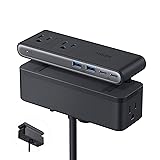
Anker Nano Power Strip, Desk Clamp with 1500J Surge Protector, 5ft Extension Cord, 70W Max Gaming Desk Accessories, 6 AC, 2 USB A, 2 USB C, Home Office Essentials, Fit 0.6~1.8'' Tabletop Edge
$69.99 (as of June 19, 2026 01:00 GMT +00:00 - More infoProduct prices and availability are accurate as of the date/time indicated and are subject to change. Any price and availability information displayed on [relevant Amazon Site(s), as applicable] at the time of purchase will apply to the purchase of this product.)
Apple iPad Air 11-inch (M4): Liquid Retina Display, 128GB, 12MP Front/Back Camera, Wi-Fi 7 with Apple N1, Touch ID, All-Day Battery Life — Space Gray
$599.00 (as of June 19, 2026 01:00 GMT +00:00 - More infoProduct prices and availability are accurate as of the date/time indicated and are subject to change. Any price and availability information displayed on [relevant Amazon Site(s), as applicable] at the time of purchase will apply to the purchase of this product.)
Apple AirPods Pro 3 Wireless Earbuds, Active Noise Cancellation, Live Translation, Heart Rate Sensing, Hearing Aid Feature, Bluetooth Headphones, Spatial Audio, High-Fidelity Sound, USB-C Charging
Now retrieving the price.
(as of June 19, 2026 01:00 GMT +00:00 - More infoProduct prices and availability are accurate as of the date/time indicated and are subject to change. Any price and availability information displayed on [relevant Amazon Site(s), as applicable] at the time of purchase will apply to the purchase of this product.)