The world of electronic design automation (EDA) is undergoing a profound transformation, driven by the relentless march of artificial intelligence. As chip designs grow exponentially in complexity and the demand for faster, more efficient devices intensifies, traditional manual and semi-automated design processes are reaching their limits. Enter AI, a revolutionary force that is reshaping every facet of chip creation, from concept to fabrication. This paradigm shift is giving rise to a new generation of sophisticated solutions, collectively known as Aipowered Eda Tools. These innovative tools are not just incremental improvements; they are fundamentally changing how engineers approach design, verification, and optimization, promising unprecedented breakthroughs in performance, power, and area (PPA) metrics. This post will delve into five essential Aipowered Eda Tools that are paving the way for the next era of electronic design.
The Dawn of a New Era in Chip Design with Aipowered Eda Tools
The semiconductor industry is at an inflection point. Moore’s Law, while still relevant, faces increasing physical and economic challenges. Designers are grappling with billions of transistors, complex interactions, and stringent power budgets, making the design cycle longer and more prone to errors. This escalating complexity necessitates a smarter approach, and that’s precisely where Aipowered Eda Tools shine. They offer a pathway to manage this complexity, accelerate innovation, and achieve design goals that were previously unattainable.
Why Aipowered Eda Tools are Game-Changers
Traditional EDA flows often involve iterative, time-consuming manual processes and heuristic-based algorithms. Aipowered Eda Tools, conversely, leverage machine learning (ML), deep learning (DL), and reinforcement learning (RL) to analyze vast datasets, identify patterns, predict outcomes, and even generate optimal solutions. This intelligence allows for faster design exploration, more robust verification, and highly optimized physical implementations, significantly reducing time-to-market and development costs. According to a recent industry report by McKinsey & Company, AI adoption in semiconductor design is expected to grow substantially, driven by these efficiency gains.
1. Accelerating Design Exploration with Aipowered Eda Tools
One of the most significant bottlenecks in chip design is the initial exploration phase, where architects and designers evaluate numerous design choices to meet PPA targets. This iterative process can consume a substantial portion of the design cycle. Aipowered Eda Tools are transforming this by intelligently navigating the vast design space.
Intelligent IP Integration and Optimization
Generative AI techniques, a core component of many Aipowered Eda Tools, can rapidly generate and evaluate multiple design configurations for intellectual property (IP) blocks. These tools can suggest optimal ways to integrate various IPs, considering factors like interconnects, power delivery, and thermal dissipation. By quickly assessing millions of possibilities, they help engineers converge on a superior design much faster than manual methods. This capability is crucial for complex System-on-Chip (SoC) designs, where integrating diverse IP blocks efficiently is paramount.
Performance and Power Analysis
Predictive analytics, another powerful feature of Aipowered Eda Tools, allows for early and accurate estimation of performance, power consumption, and area. Instead of waiting for late-stage simulations, AI models trained on historical data can provide real-time feedback on design choices. This enables designers to make informed decisions earlier in the flow, preventing costly redesigns. For instance, an AI-powered tool might predict the power impact of a specific clock gating strategy with high accuracy, allowing for immediate adjustments.

2. Revolutionizing Verification and Validation with Aipowered Eda Tools
Verification often accounts for 70% or more of the total chip design effort. Finding and fixing bugs early is critical, as the cost of fixing them escalates exponentially at later stages. Aipowered Eda Tools are bringing unprecedented intelligence to this traditionally labor-intensive domain.
Smart Testbench Generation and Coverage Analysis
Traditional testbench generation is largely manual and can miss critical corner cases. AI-driven tools can analyze design specifications and automatically generate highly effective test sequences, including constrained-random and scenario-based tests. Machine learning algorithms can learn from previous verification runs to identify areas of the design that are under-tested or prone to bugs. They can also guide the creation of more efficient test vectors, drastically reducing simulation time while improving coverage. This means fewer undetected bugs make it to silicon, a significant advantage for complex designs.
Formal Verification Enhancements
Formal verification, which mathematically proves the correctness of a design, is powerful but often limited by its computational complexity. Aipowered Eda Tools are enhancing formal methods by using AI to guide proof strategies, prune search spaces, and identify relevant properties. This makes formal verification more scalable and applicable to larger parts of the design, providing greater confidence in functional correctness. For example, AI can learn which formal properties are most likely to reveal issues based on design patterns.

3. Optimizing Physical Design: Layout and Routing with Aipowered Eda Tools
The physical implementation stage, involving placement, routing, and timing closure, is a highly intricate process with immense impact on chip performance and manufacturability. Aipowered Eda Tools are making significant inroads here, achieving results that often surpass human capabilities.
Automated Placement and Routing
AI-driven placement and routing engines can explore millions of configurations to find optimal solutions that minimize wire length, reduce congestion, and meet critical timing constraints. Reinforcement learning, in particular, has shown promise in learning optimal routing strategies by iteratively improving placements and routes based on feedback. This leads to tighter designs, better power distribution, and improved signal integrity. Companies like Cadence and Synopsys are investing heavily in these capabilities, integrating AI into their core physical design platforms to deliver superior PPA.
Signal Integrity and Power Integrity Analysis
As operating frequencies increase and geometries shrink, signal integrity (SI) and power integrity (PI) become critical challenges. Aipowered Eda Tools can predict potential SI/PI issues early in the physical design flow by analyzing layout patterns and predicting crosstalk, voltage drops, and electromigration risks. They can then suggest layout modifications or design rule adjustments to mitigate these problems proactively, saving significant time and resources compared to identifying them post-layout. This predictive capability is vital for high-speed interfaces and low-power circuits.

4. Predictive Maintenance and Reliability Through Aipowered Eda Tools
Beyond the initial design and fabrication, the long-term reliability and performance of chips are paramount. Aipowered Eda Tools are extending their reach into predicting and enhancing the lifespan of semiconductor devices.
Proactive Failure Prediction
By analyzing vast amounts of manufacturing test data, field usage data, and design parameters, AI models can predict potential failure points in a design even before fabrication. These tools can identify subtle correlations and anomalies that might indicate weaknesses susceptible to wear-out mechanisms like electromigration, hot carrier injection, or negative bias temperature instability (NBTI). This allows designers to reinforce critical areas or adjust operating conditions to enhance product longevity. This proactive approach significantly reduces warranty costs and improves customer satisfaction.
Lifetime Estimation and Degradation Modeling
Aipowered Eda Tools can build sophisticated degradation models based on various environmental factors and operational stresses. These models can predict the expected lifetime of a chip under different usage scenarios, helping manufacturers provide more accurate reliability specifications. Furthermore, AI can aid in designing circuits that are inherently more resilient to aging effects, ensuring consistent performance over the device’s operational life. This is particularly important for mission-critical applications in automotive, aerospace, and medical fields, where reliability is non-negotiable.

5. The Future Landscape: Collaborative Aipowered Eda Tools and Beyond
The impact of AI on EDA is still in its nascent stages, with future developments promising even more profound changes. The trend is moving towards more autonomous and collaborative Aipowered Eda Tools that can learn and adapt.
Democratizing Chip Design
One of the exciting prospects of advanced Aipowered Eda Tools is their potential to democratize chip design. By automating complex, specialized tasks, these tools could lower the barrier to entry for smaller teams, startups, and even individual designers. Imagine a future where an AI assistant can guide a designer through the entire process, from high-level specification to GDSII, making sophisticated chip design accessible to a wider audience. This could foster an explosion of innovation, similar to how software development tools have empowered countless developers.
Continuous Learning and Adaptation
The next generation of Aipowered Eda Tools will be characterized by continuous learning. They will not only leverage historical data but will also learn from ongoing design projects, adapting their algorithms and models to new technologies, design methodologies, and performance requirements. This self-improving capability means the tools will become increasingly intelligent and efficient over time, offering an ever-evolving advantage to designers. This adaptive nature ensures that the tools remain relevant and effective as the semiconductor landscape continues to shift at a rapid pace.

Challenges and Considerations for Adopting Aipowered Eda Tools
While the benefits of Aipowered Eda Tools are immense, their adoption is not without challenges. Data quality and quantity are crucial for training effective AI models. Integrating these new tools into existing, complex design flows requires careful planning and execution. Furthermore, a new skillset is emerging, requiring engineers to understand not only traditional EDA but also the principles of AI and machine learning. Companies must invest in training and infrastructure to fully harness the potential of these transformative technologies.
The journey towards fully autonomous chip design is long, but the strides made by current Aipowered Eda Tools are undeniably significant. These tools are already proving their worth by tackling some of the most daunting challenges in modern semiconductor design.
The integration of AI into electronic design automation marks a pivotal moment for the semiconductor industry. From accelerating design exploration and revolutionizing verification to optimizing physical layout and ensuring long-term reliability, Aipowered Eda Tools are indispensable for anyone looking to push the boundaries of chip design. They empower engineers to manage unprecedented complexity, achieve superior PPA, and significantly reduce time-to-market. As AI continues to evolve, these tools will become even more sophisticated, intelligent, and autonomous, further cementing their role as essential components for breakthrough designs. Embrace the power of these advanced solutions to stay competitive and drive the next wave of innovation in electronics.
Ready to transform your design process? Explore how the latest Aipowered Eda Tools can accelerate your next project and unlock new levels of efficiency and performance. Contact our experts today to learn more about integrating these cutting-edge solutions into your workflow.

Horizon Group USA Puffy Sticker Playset for Kids, Kpop Demon Hunters
$3.99 (as of June 19, 2026 01:00 GMT +00:00 - More infoProduct prices and availability are accurate as of the date/time indicated and are subject to change. Any price and availability information displayed on [relevant Amazon Site(s), as applicable] at the time of purchase will apply to the purchase of this product.)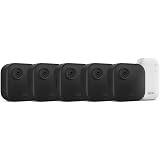
Blink Outdoor 4 – Wireless smart security camera, two-year battery life, 1080p HD day and infrared night live view, two-way talk. Sync Module Core included – 5 camera system
Now retrieving the price.
(as of June 19, 2026 01:00 GMT +00:00 - More infoProduct prices and availability are accurate as of the date/time indicated and are subject to change. Any price and availability information displayed on [relevant Amazon Site(s), as applicable] at the time of purchase will apply to the purchase of this product.)
Sony WH-CH520 Wireless Headphones Bluetooth On-Ear Headset with Microphone and up to 50 Hours Battery Life with Quick Charging, Black
Now retrieving the price.
(as of June 19, 2026 01:00 GMT +00:00 - More infoProduct prices and availability are accurate as of the date/time indicated and are subject to change. Any price and availability information displayed on [relevant Amazon Site(s), as applicable] at the time of purchase will apply to the purchase of this product.)