The dream of a truly intelligent home, one that anticipates our needs and operates seamlessly in the background, is rapidly becoming a reality. In 2024, artificial intelligence (AI) stands at the forefront of this transformation, offering groundbreaking **solutions** that significantly enhance the performance of smart home devices. From optimizing energy consumption to bolstering security and personalizing daily routines, AI is no longer a futuristic concept but a vital component for a smarter, more efficient living space. This blog post delves into the top AI **solutions** revolutionizing smart homes, providing essential insights for anyone looking to maximize their home’s potential.
5 Essential Solutions for Maximum Impact
As smart homes evolve, the demand for more intuitive, reliable, and secure systems grows. AI-driven advancements are meeting this demand head-on, delivering powerful **solutions** that elevate user experience and device efficiency. Let’s explore five critical areas where AI is making the biggest difference.
1. Predictive Maintenance and Anomaly Detection Solutions
One of the most valuable AI **solutions** for smart homes is its ability to predict potential device failures and detect anomalies before they become major problems. Instead of waiting for a device to break down, AI algorithms continuously analyze operational data from various sensors and devices. This proactive approach ensures greater reliability and extends the lifespan of your smart home investments.
AI models learn the normal operating patterns of devices like HVAC systems, refrigerators, and security cameras. Any deviation from these patterns, such as unusual power consumption, temperature fluctuations, or strange noises, is flagged as a potential anomaly. For instance, a smart thermostat powered by AI can detect if your furnace is working harder than usual to maintain a set temperature, indicating a potential filter issue or mechanical wear. These predictive **solutions** allow homeowners to address issues promptly, often with simple maintenance, preventing costly repairs or system downtime.
Beyond predicting failures, anomaly detection also plays a crucial role in security. AI-powered cameras can distinguish between a family member, a delivery person, and an unknown intruder, even learning to ignore pets. If an unfamiliar face or an unusual movement pattern is detected at an odd hour, the system can send an immediate alert, providing robust security **solutions** that are far more sophisticated than traditional motion sensors. (Image alt text: AI-powered predictive maintenance dashboard showing device health and anomaly alerts.)
2. Personalized Automation and Adaptive Learning Solutions
The true intelligence of a smart home lies in its ability to adapt to its occupants’ needs and preferences without constant manual input. AI-driven personalized automation and adaptive learning offer precisely these kinds of **solutions**. These systems go beyond simple “if this, then that” rules, learning from user behavior over time to create a truly intuitive living environment.
AI algorithms observe routines, such as when lights are typically turned on or off, preferred room temperatures at different times of the day, and even entertainment choices. Over weeks and months, the system builds a comprehensive profile of the household’s habits. For example, an AI-powered lighting system might learn that you prefer brighter lights in the kitchen during morning prep and softer, warmer tones in the living room in the evening. It will then adjust automatically, providing seamless **solutions** tailored to your lifestyle.
These adaptive **solutions** extend to climate control, where AI can optimize heating and cooling based on occupancy, external weather conditions, and even forecast data. Instead of just maintaining a set temperature, it learns to pre-cool or pre-heat based on your typical return-home schedule, ensuring comfort while minimizing energy waste. This level of personalization not only enhances comfort but also contributes significantly to energy efficiency, offering smart and responsive **solutions** for modern living.
3. Enhanced Security and Privacy Solutions
Security and privacy are paramount concerns for smart home users, and AI is providing increasingly sophisticated **solutions** to address these challenges. Beyond basic motion detection, AI-powered security systems leverage advanced analytics to offer robust protection and ensure data integrity.
AI significantly enhances surveillance capabilities through features like advanced facial recognition and object detection. Modern smart cameras can identify individuals, differentiate between humans and animals, and even detect specific behaviors, such as a package being left or picked up. This reduces false alarms and provides more actionable intelligence. For instance, an AI-enabled doorbell camera can alert you only when a person is at your door, not when a car drives by or a tree branch sways. These intelligent **solutions** make home security both more effective and less intrusive.
Furthermore, AI plays a crucial role in safeguarding privacy. With the proliferation of data collected by smart devices, AI can be used to process and store this information securely, often employing techniques like local processing (edge AI) to minimize data transfer to the cloud. Some AI **solutions** even anonymize data or use federated learning, where models are trained on decentralized data without ever centralizing raw user information, offering a stronger commitment to privacy. A recent report by Statista highlights the growing market for smart home security, underscoring the demand for these advanced protective **solutions**.
4. Energy Efficiency and Resource Optimization Solutions
Reducing energy consumption and optimizing resource usage are major benefits of AI integration in smart homes. AI-driven **solutions** analyze vast amounts of data to make intelligent decisions that lead to significant savings and a reduced environmental footprint. This is one of the most practical and impactful applications of AI in the home.
Smart thermostats are prime examples, using AI to learn occupancy patterns, weather forecasts, and even utility pricing to create optimal heating and cooling schedules. Instead of simply maintaining a temperature, they predict when heating or cooling will be needed, pre-emptively adjusting to avoid energy spikes. Studies have shown that smart thermostats can lead to significant energy savings, sometimes reducing heating and cooling costs by 10-15%. These AI-powered **solutions** are not just about comfort; they’re about smart energy management.
Beyond climate control, AI extends to lighting, water management, and even appliance usage. AI-enabled lighting systems can adjust brightness and color temperature based on natural light availability, time of day, and occupancy, ensuring optimal illumination with minimal waste. Similarly, smart sprinklers use local weather data and soil moisture sensors to water lawns only when necessary, preventing overwatering. These comprehensive resource optimization **solutions** demonstrate AI’s capacity to create a truly sustainable and cost-effective living environment. For more detailed insights into sustainable smart home practices, consider exploring resources from the ENERGY STAR program.
5. Seamless Interoperability and Voice Assistant Integration Solutions
The fragmented nature of the smart home ecosystem, with devices from different manufacturers often struggling to communicate, has been a major hurdle. AI is emerging as a powerful orchestrator, providing seamless interoperability and enhancing voice assistant integration, offering crucial **solutions** to this complexity.
AI-powered central hubs and platforms act as universal translators, allowing devices from various brands to communicate and work together harmoniously. Using machine learning, these hubs can understand the capabilities of different devices and create complex routines that span multiple ecosystems. For example, an AI hub could allow your Samsung TV to trigger Philips Hue lights and then lock your August smart lock, all through a single command or automated sequence. These interoperability **solutions** unlock the full potential of a diverse smart home setup.
Furthermore, AI has revolutionized voice assistant integration, making interactions more natural and effective. Modern voice assistants like Amazon Alexa, Google Assistant, and Apple Siri are powered by sophisticated AI that understands context, learns preferences, and processes complex commands. They can differentiate between users, understand nuanced requests, and even infer intent, providing incredibly intuitive control over your smart home. This leads to more reliable and responsive voice control **solutions**, where you can simply say “Good morning” and your home knows to open the blinds, turn on the coffee maker, and play your favorite news briefing. The continuous improvement in natural language processing (NLP) driven by AI ensures these voice-activated **solutions** become even more robust and user-friendly with time.
Embracing the Future with Smart AI Solutions
The integration of AI into smart home devices is no longer a luxury but a necessity for unlocking their full potential. The five essential **solutions** discussed – predictive maintenance, personalized automation, enhanced security, energy efficiency, and seamless interoperability – collectively create a living environment that is more intelligent, responsive, and tailored to individual needs than ever before. These AI-powered advancements are transforming homes into dynamic, adaptive spaces that offer unparalleled comfort, convenience, and peace of mind.
As we move further into 2024, the landscape of smart home technology will continue to evolve, driven by even more sophisticated AI **solutions**. These innovations promise not only to make our homes smarter but also to make our lives easier, safer, and more sustainable. Exploring and implementing these cutting-edge AI **solutions** can significantly elevate your smart home experience. Ready to transform your living space? Start by researching specific AI-enabled smart home products that align with your priorities, whether it’s enhanced security or maximizing energy savings. Dive into the world of intelligent living and discover the incredible impact these **solutions** can have on your daily life.
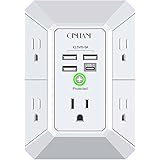
Wall Charger, Surge Protector, QINLIANF 5 Outlet Extender with 4 USB Charging Ports, 3-Sided 1680J Power Strip Multi Plug Adapter Spaced for Home Travel Office
Now retrieving the price.
(as of June 19, 2026 01:00 GMT +00:00 - More infoProduct prices and availability are accurate as of the date/time indicated and are subject to change. Any price and availability information displayed on [relevant Amazon Site(s), as applicable] at the time of purchase will apply to the purchase of this product.)
Horizon Group USA Puffy Sticker Playset for Kids, Kpop Demon Hunters
$3.99 (as of June 19, 2026 01:00 GMT +00:00 - More infoProduct prices and availability are accurate as of the date/time indicated and are subject to change. Any price and availability information displayed on [relevant Amazon Site(s), as applicable] at the time of purchase will apply to the purchase of this product.)