The world of technology is a relentless torrent of innovation, where yesterday’s breakthroughs become today’s foundations. At the heart of this exhilarating pace lies the dynamic duo of Artificial Intelligence (AI) and Electronics. AI, once a niche academic pursuit, now fuels everything from our smartphones to smart factories. Meanwhile, electronics continue to shrink, speed up, and become more powerful, creating the very canvas upon which AI paints its intricate designs.
September has been a particularly vibrant month, buzzing with significant advancements and releases that underscore this symbiotic relationship. From groundbreaking chip architectures to sophisticated AI-driven design tools, the landscape is evolving at warp speed. Whether you’re a tech enthusiast, an industry professional, or simply curious about the future, understanding these shifts is key to navigating the next wave of innovation.
In this comprehensive update, we’ll dive deep into the top AI tools that are currently shaping industries, particularly the electronics sector. Following that, we’ll unveil the most impactful electronics updates from September, highlighting how these developments are not just incremental improvements, but often foundational shifts paving the way for even more intelligent technologies. Get ready to explore the cutting edge where silicon meets sentience!
The AI Revolution in Electronics: A September Snapshot
AI’s integration into electronics isn’t just about making devices “smarter”; it’s about fundamentally transforming every stage of the electronics lifecycle. From initial concept and design to manufacturing, testing, and even end-of-life management, AI tools are proving indispensable. This convergence is leading to unprecedented levels of efficiency, precision, and innovation, pushing the boundaries of what’s possible with hardware.
This month, we’ve seen continued acceleration in how AI is leveraged, not just as an add-on feature, but as a core component in developing the next generation of electronic devices. The tools discussed below represent the forefront of this revolution, offering capabilities that were unimaginable just a few years ago.
Top AI Tools Powering Innovation
The toolkit for AI development is vast and ever-expanding, but certain categories and specific tools stand out for their impact, especially within the context of electronics. These aren’t just theoretical concepts; they are practical, powerful instruments driving tangible progress.
Generative AI for Design & Prototyping
Generative AI is rapidly becoming a game-changer in the early stages of electronics development. By learning from vast datasets of existing designs, specifications, and performance metrics, these AI models can autonomously generate novel design concepts, optimize layouts, and even suggest material choices. This dramatically accelerates the iterative design process, reduces human error, and opens up possibilities for designs that might be too complex or counter-intuitive for human engineers alone.
Tools like those integrating with CAD/EDA software (e.g., Synopsys’s AI-driven design tools, Cadence’s Cerebrus Intelligent Chip Explorer) are now capable of optimizing chip layouts, power consumption, and thermal management at a scale and speed previously unattainable. In September, we saw more discussions around how these AI assistants are moving beyond mere suggestions to actively participating in the creation of complex circuit board layouts and even novel antenna designs, predicting performance before a single prototype is built. This capability is crucial for keeping pace with the demand for smaller, more powerful, and energy-efficient devices.
AI for Supply Chain & Manufacturing Optimization
The global electronics supply chain is notoriously complex and prone to disruptions. AI tools are stepping in to bring unprecedented levels of visibility, predictability, and efficiency. From predicting demand fluctuations to optimizing logistics and identifying potential bottlenecks, AI is transforming how electronics are made and delivered.
Predictive maintenance powered by AI is a huge win for manufacturing. AI vision systems, for instance, are becoming incredibly sophisticated at detecting microscopic defects in components or finished products on assembly lines with superhuman accuracy and speed. Companies like Siemens (with its MindSphere IoT OS) and various startups are deploying AI models that analyze sensor data from manufacturing equipment to predict failures before they occur, minimizing downtime and waste. September saw increased adoption of these AI-driven quality control systems, particularly in high-volume production facilities, ensuring higher yields and reducing costly recalls. Furthermore, AI-powered inventory management systems are helping to mitigate supply chain shocks by dynamically adjusting stock levels based on real-time data and predictive analytics.
Edge AI & Embedded Systems Development
As AI moves from the cloud to the device itself, Edge AI is becoming paramount. This involves developing AI models that can run efficiently on resource-constrained hardware, enabling real-time processing without relying on constant cloud connectivity. This is critical for applications like autonomous vehicles, smart home devices, wearables, and industrial IoT sensors, where latency, privacy, and connectivity are key concerns.
Frameworks like TensorFlow Lite and OpenVINO continue to evolve, offering optimized inference engines for various hardware platforms. Specialized AI accelerators like Neural Processing Units (NPUs) and custom ASICs are becoming more common in consumer electronics. September highlighted the ongoing push for more powerful yet energy-efficient edge AI processors, with new silicon designs (as we’ll see in the electronics updates) specifically tailored to handle complex AI workloads locally. This trend is empowering a new generation of truly intelligent devices that can act autonomously and respond instantly to their environment.
AI for Testing & Verification
Testing and verification are among the most time-consuming and expensive phases in electronics development. AI is revolutionizing this by automating test case generation, identifying potential failure points, and even predicting component longevity under various conditions. This not only speeds up time-to-market but also significantly improves product reliability.
AI-driven simulation tools can run millions of test scenarios in a fraction of the time it would take human engineers, pinpointing vulnerabilities in hardware and software interactions. Machine learning algorithms are being used to analyze vast amounts of test data, quickly identifying patterns that indicate subtle flaws or performance degradation. This month, we’ve seen more sophisticated AI tools being integrated into automated test equipment (ATE), allowing for smarter, adaptive testing protocols that can learn and refine themselves over time, leading to more robust and dependable electronic products.
September’s Latest in Top Electronics
While AI tools provide the intelligence, the electronics industry provides the physical embodiment of that intelligence. September has delivered a fresh wave of hardware innovations, from powerful new chips to smarter consumer devices, all of which either enable or are enhanced by AI.
Semiconductor Advancements & Chip Releases
September was a significant month for silicon. Apple unveiled its new A17 Pro chip with the iPhone 15 Pro series. This chip is notable for being the industry’s first 3-nanometer processor, offering substantial improvements in performance and power efficiency. Crucially, the A17 Pro includes a 16-core Neural Engine that is twice as fast as its predecessor, capable of nearly 35 trillion operations per second. This massive leap in on-device AI processing power directly enhances features like computational photography, voice processing, and advanced gaming experiences.
Intel also held its annual Innovation event in September, showcasing advancements in its Meteor Lake client processors and outlining its roadmap for future AI-centric CPUs and GPUs. The focus was heavily on integrating AI accelerators directly into the chip architecture, signaling a future where AI processing is a fundamental capability of every computing device, from laptops to data centers. These announcements emphasize the industry-wide shift towards heterogeneous computing, where specialized cores handle AI workloads more efficiently than general-purpose CPUs.
Consumer Electronics Innovations
Beyond the raw power of new chips, September brought exciting new consumer electronics that leverage AI in tangible ways. The aforementioned iPhone 15 series, with its A17 Pro chip, wasn’t just about speed; its camera system received significant AI enhancements, offering improved low-light performance, more intelligent portrait modes, and advanced video capabilities, all processed on-device. The Dynamic Island feature, while not explicitly AI, demonstrates a smart, adaptive UI design that integrates seamlessly with background processes.
The IFA Berlin trade show, held earlier in September, also showcased a plethora of new smart home devices, TVs, and wearables. Many of these products highlighted AI-driven features: smart TVs with improved upscaling and personalized content recommendations, smart speakers with more natural language processing, and fitness trackers with more accurate health monitoring thanks to advanced sensor fusion and AI algorithms. The trend is clear: consumer electronics are becoming increasingly intelligent, intuitive, and personalized, with AI as the driving force.
Industrial & IoT Electronics Trends
The industrial sector and the Internet of Things (IoT) continue to be fertile ground for electronics innovation, with September seeing a push towards more robust and intelligent solutions. New industrial sensors with embedded AI capabilities are emerging, allowing for real-time anomaly detection and predictive maintenance directly at the source, reducing the need for extensive cloud processing. Advancements in low-power wide-area network (LPWAN) technologies and 5G connectivity modules are enabling more reliable and faster data transfer for IoT devices, which is critical for supporting the growing demands of AI applications.
There’s also a strong emphasis on cybersecurity within industrial IoT, with AI playing a role in detecting and mitigating threats in real-time. The integration of AI into edge gateways and controllers is making factories smarter, more autonomous, and more resilient, paving the way for the next generation of Industry 4.0 applications.
Sustainable & Green Electronics
A crucial, though often less publicized, area of innovation is sustainable electronics. September saw continued efforts towards reducing the environmental footprint of electronic devices. This includes the development of more energy-efficient components, the use of recycled and recyclable materials, and improved manufacturing processes that minimize waste. While not always directly “AI-driven,” AI tools are increasingly being used to optimize these processes – from simulating material performance to optimizing energy consumption in data centers and manufacturing plants. Apple’s announcement of its continued focus on carbon-neutral manufacturing and increased use of recycled materials in its products highlights a broader industry commitment to environmental responsibility, a commitment that AI can help accelerate through optimized design and production.
The Synergistic Future: AI and Electronics Hand-in-Hand
The developments of September vividly illustrate that AI and electronics are no longer distinct fields but are deeply intertwined and mutually reinforcing. AI drives the demand for more powerful, efficient, and specialized hardware, while advancements in electronics provide the essential substrate for AI’s continued evolution and expansion. This synergy is creating a virtuous cycle of innovation.
Looking ahead, we can anticipate even more profound integration. Imagine devices that not only run AI but are designed by AI, manufactured by AI-controlled robots, and maintained by AI-driven predictive systems. This future promises not just smarter gadgets but entirely new paradigms of computing, interaction, and automation across every sector.
Conclusion
September has been a testament to the relentless march of technological progress, particularly at the intersection of AI and electronics. We’ve seen how sophisticated AI tools are revolutionizing everything from chip design and manufacturing to supply chain optimization and advanced testing. Simultaneously, the latest electronics updates, from Apple’s groundbreaking A17 Pro chip to Intel’s AI-centric roadmap and the array of smart consumer devices, underscore the hardware advancements that make these AI dreams a reality.
The pace of innovation is breathtaking, and the implications are far-reaching. As AI becomes more sophisticated and electronics become more powerful and ubiquitous, we are stepping into an era where intelligent systems will permeate every aspect of our lives and industries. Staying informed about these developments isn’t just about keeping up; it’s about understanding the very fabric of our technological future. The journey of AI and electronics, hand-in-hand, promises an exciting and transformative path ahead.
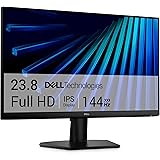
Dell 24 Monitor - SE2426H - 23.8-inch FHD (1920x1080) 144Hz 1ms Display, in-Plane Switching (IPS) Technology, AMD FreeSync™, TÜV 3-Star 2X HDMI, Tilt
$86.80 (as of June 19, 2026 01:00 GMT +00:00 - More infoProduct prices and availability are accurate as of the date/time indicated and are subject to change. Any price and availability information displayed on [relevant Amazon Site(s), as applicable] at the time of purchase will apply to the purchase of this product.)
Roku Streaming Stick HD — HD Streaming Device for TV with Roku Voice Remote, Free & Live TV
Now retrieving the price.
(as of June 19, 2026 01:00 GMT +00:00 - More infoProduct prices and availability are accurate as of the date/time indicated and are subject to change. Any price and availability information displayed on [relevant Amazon Site(s), as applicable] at the time of purchase will apply to the purchase of this product.)
Roku TV Remote Control (Official Manufacturer Product) - Simple Setup, & Pre-Set App Shortcuts - Replacement Remote Compatible with RokuTV Models ONLY (Not Roku Players)
Now retrieving the price.
(as of June 19, 2026 01:00 GMT +00:00 - More infoProduct prices and availability are accurate as of the date/time indicated and are subject to change. Any price and availability information displayed on [relevant Amazon Site(s), as applicable] at the time of purchase will apply to the purchase of this product.)